
August 25, 2025
Agriculture
Impact of Climate Change on Agriculture
Climate change, also known as global warming, refers to the increase in average surface temperatures on Earth.
An overwhelming scientific consensus maintains that climate change is primarily due to the human use of fossil fuels, which releases carbon dioxide and other greenhouse gases into the atmosphere.
The primary greenhouse gases in Earth’s atmosphere are water vapor, carbon dioxide, methane, nitrous oxide, and ozone.
These gases can absorb the spectrum of infrared light and contribute to the warming of our atmosphere, which can have a range of effects on ecosystems, including rising sea levels, floods, severe weather events, and droughts that render landscapes more susceptible to wildfires.
Other human activities, such as agriculture and deforestation, also contribute to the proliferation of greenhouse gases that cause climate change.
Warmer air can hold a higher water content, which makes rainfall patterns more extreme.
Climate change is having a serious impact on the world’s water systems, leading to increased flooding and droughts.
Extremes of drought and flooding will become more common, causing displacement and conflict.
Even small increases in Earth’s temperature caused by climate change can have severe effects.
The Earth’s average temperature has increased by 1.4°F over the past century and is expected to rise by as much as 11.5°F over the next.
In reality, the average temperature during the last Ice Age was approximately 4°F lower than it is today.
The United Nations Framework Convention on Climate Change (UNFCCC) defines it as a change of climate that is attributed directly or indirectly to human activity, altering the composition of the global atmosphere.
It has been estimated that if greenhouse gas emissions continue at the present rate, Earth’s surface temperature could exceed historical values as early as 2047, with potentially harmful effects on ecosystems, biodiversity, and the livelihoods of people worldwide.
Agriculture is the backbone of the Indian Economy.
About 65% of the Indian population depends directly on agriculture, and it accounts for around 22% of the GDP.
Rainfed agriculture accounts for 67 percent of the net sown area, contributing 44 percent of the food grains and supporting 40 percent of the population.
Uneven rainfall patterns, increased temperatures, and elevated CO2 content in the atmosphere are key climatic parameters that impact crop production.
Research studies indicate that weathering parameters strongly influence (67%) compared to other factors, such as soil and nutrient management (33%), during the cropping season.
The Intergovernmental Panel on Climate Change (IPCC) projected that the global mean surface temperature will likely rise, which may result in uneven climatic changes.
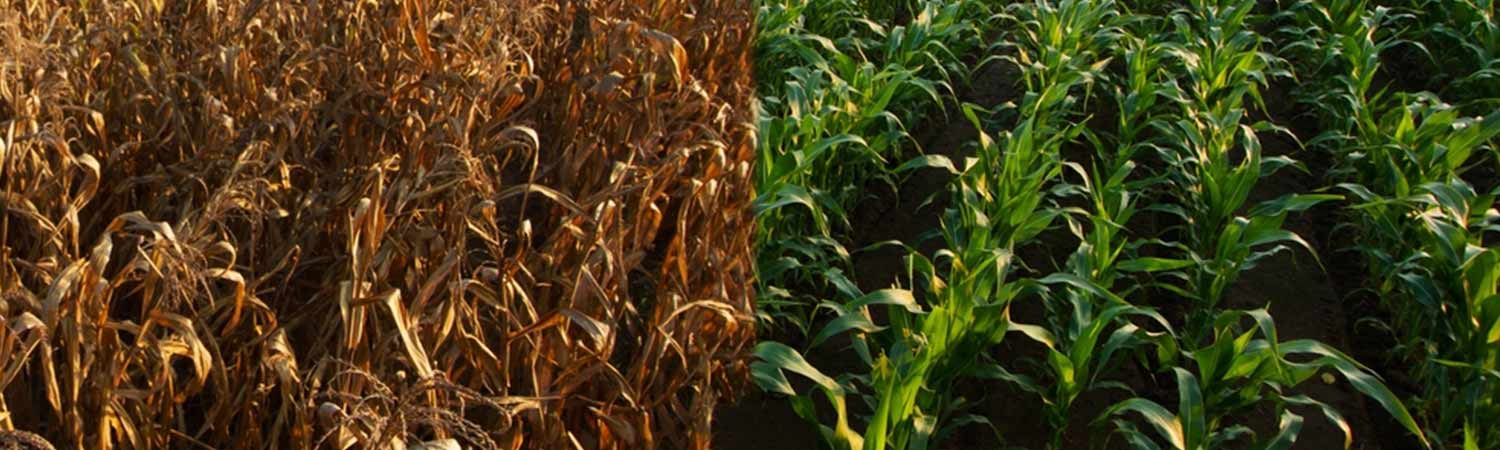
This rising temperature may affect crop yield on a large scale.
It has been reported over the 20th century that rising temperatures play an important role in global warming compared to precipitation.
Researchers have confirmed that crop yield falls by 3% to 5% for every 1°F increase in temperature.
A recently published article in ‘The Guardian’ states that the suicides of nearly 60,000 Indian farmers are linked to climate change.
The survey says that the rising temperatures and the resultant stress on India’s agricultural sector may have contributed to an increase in suicides over the past 30 years.
Illustrating the extreme sensitivity of the Indian agricultural industry to spikes in temperature, the study from the University of California, Berkeley, found that an increase of just 1 °C on an average day during the growing season was associated with 67 more suicides.
Also reported that rainfall increases of as little as 1cm each year were associated with an average 7% drop in the suicide rate.
A recently published special issue on climate change in ‘Down To Earth’ magazine states that climate change had a significant impact on agriculture, which led to a 1.5 percent loss in India’s GDP.
Their research findings are important and eye-opening.
It states that by 2030, rice and wheat are likely to see about a 6-10 per cent decrease in yields.
Crops such as rice, wheat, maize, and sorghum will be severely affected by the extreme weather events.
However, crops like soybean and gram are likely to benefit from a higher level of CO2 in the atmosphere, which helps in CO2 fertilisation.
The rising temperature has an adverse effect on flowering, leading to the buildup of pests and diseases.
Floods and excessive rain over a short period cause extensive damage to crops.
Extreme weather events have caught the attention of agrarian experts and scientists alike, and they are now focusing on natural farming to arrest the impacts of climate change.
The experts in this field say that the effect of climate change on crops mainly depends on the net sown area and the geographical location of a region where a particular crop is sown.
Mustard may experience a neutral to positive impact in northern India, especially in Punjab and Haryana, where winter temperatures are very low.
A 1°C rise in temperature won’t have much impact on production.
However, a similar rise in temperature in eastern and central India will have a negative impact.
Interestingly, potato production may be positively impacted by elevated CO2 concentration, as reported by experts at the Central Potato Research Institute, who claimed that potato yield would increase by 11.12 percent at elevated CO2 levels of 550 PPM and a 1°C rise in temperature.
However, a further increase in CO2, accompanied by a likely rise in temperature of 3°C, will result in a 13.72 percent decline in production by 2050.
Logically, the Kharif crops will be more affected by rainfall variability, while the Rabi crops will be more affected by minimum temperatures.
Wheat is likely to be negatively impacted in the Rabi season due to terminal heat stress, with a 1°C rise in temperature resulting in a loss of 4 metric tonnes (MT) of wheat.
Similarly, legumes are expected to benefit from elevated levels of atmospheric CO2.
An area is considered water-stressed when its annual water supply per person drops below 1,700 cubic meters per year.
We are soon going to face a situation where wars will be fought over water.
Much of the prosperity in the last two decades can be attributed to the exploitation of groundwater.
However, rainfed agriculture is being severely affected by fluctuations in rainfall patterns.
This year, the Vidharbha region in Maharashtra experienced a severe drought, with a prolonged dry spell affecting crucial stages of plant growth, including the flowering stage in soybeans and the boll formation stage in cotton.
Additionally, this region experienced unexpected delayed rains at the time of the first cotton picking, which significantly spoiled the produce.
Agriculture should be able to sustain itself despite adverse climatic conditions and produce enough food to feed the world’s population.
Natural farming, utilizing climate-tolerant or stress-tolerant crop varieties, is an emerging area of research.
Efficient water and nutrient management options to enhance use efficiency, evaluation of the carbon sequestration potential of different land-use systems, understanding the opportunities offered by conservation agriculture and agroforestry, and identifying cost-effective methane emission reduction practices in ruminants and rice paddies are a few important mitigation options that need to be considered.
References:
Recent Blogs


