
March 04, 2021
Wastewater
How To Make Your Septic System Eco-Friendly?
In 2021, it wouldn’t be an exaggeration to say that going green has become a trend globally.
You must have probably observed that terms like ‘eco-friendly,’ ‘environmentally-friendly,’ ‘think green,’ and so on are now used everywhere.
Eco-conscious products associated with fashion, technology, food, and other industries have indeed captured the imagination of people.
Thanks to the pandemic, people now care for nature more than ever. And perhaps it is the only good that came out of it.
That’s all great, by the way, for the environment as well as the human population.
But why on earth should your septic system be eco-friendly?
And is it even possible to achieve this objective?
Let’s delve deeper to find the answer.
To begin with, your septic tank, located underground, is one of the most important components of your home.
Though it is invisible, know that it is not irrelevant.
Ever wondered where do all the human poop, other waste, and water go once it is flushed down from the toilet?
Yes, it reaches the septic tank, where the action of healthy microorganisms breaks it down.
Consequently, solid particles in the wastewater settle down to the bottom, and fat, oil, and grease form a layer of scum at the top.
The effluent liquid, which is clear in the middle layer, is released into the environment without causing any harm.
Thanks to the septic system and champion microbes, you can live your life in peace.
Because if your septic tank fails or malfunctions, it is nothing less than a nightmare!
The stinky smell will give you a headache. Moreover, it can lead to drastic consequences for the environment.
Without effective septic tank treatment, the wastewater containing pathogens can pollute nearby water resources and groundwater as well.
It may disrupt the natural balance of the aquatic ecosystem, harm plant life, and lead to animal deaths.
The human consumption of such water can be hazardous to health as well.
These are the reasons why your septic tank should be eco-friendly.
Now, let’s see how you can achieve this objective.
- Beware of what you flush – It is essential to note what you are flushing down the toilet. Besides wastewater and toilet paper, avoid disposing of non-biodegradable materials, such as diapers, medicines, and plastics, into the toilet. First of all, it can lead to clogging, which can be detrimental to the system. Secondly, such waste is hard to degrade and thus harmful to the septic system and the environment.
- Limit water usage – Using an extensive amount of water can put pressure on the septic system. It can affect performance and reduce its lifespan. Therefore, limit excessive water usage at homes and prevent any unnecessary wastage of water.
- Avoid chemical cleaners – People often resort to chemical cleaners for cleaning toilets and clearing a clog. However, chemicals can impede the performance of beneficial microorganisms present in the septic tank system. Without a proper breakdown of waste, it reduces system efficiency, ultimately polluting the water resources. Therefore, it is advisable to avoid chemical cleaners and opt for natural and eco-friendly alternatives that are available today.
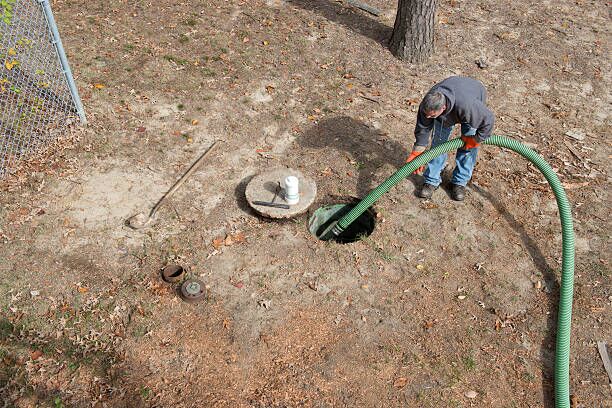
- Regular maintenance –Your septic tank system can perform consistently if you conduct regular maintenance. It is essential to address smaller issues promptly and prevent them from escalating into larger problems. Most often, the stinky smell is what alerts people. There are myriad ways to perform routine maintenance, including experts removing waste mechanically, but these methods are often very expensive and time-consuming.
Read on to know better alternatives available!
Organica Biotech’s Bioclean Septic contains septic tank enzyme-producing bacteria that effectively degrade human fecal matter and boost the overall performance of the septic tank system.
It minimizes sludge buildup and prevents choke-ups. Unlike chemical cleaners, it is completely natural, safe, and eco-friendly.
You can use Bioclean Septic to make the septic tank eco-friendly.
It is a great alternative to mechanical cleaning of the septic tank as well.
You need to add a regular dose of Bioclean Septic to the septic system, depending on the size of your tank.
Also, read
- Your Guide To Successful Septic Tank Maintenance
- Providing Bioclean BD For the Septic Tank To The Defence
- Septic Tanks: How We Can Stop Them From Turning Into Lethal Gas Chambers
- FOG Issues and Septic Tank Struggles During Winter Months
- Septic Tank Effluent & Its Effects On Ground Water Quality in Algeria
Recent Blogs


