
March 01, 2025
Sanitation
How Does a Biodigester Septic Tank Work: All You Need to Know
India is one of the most populous countries in the world, with high population densities in rural areas and urban cities.
As a result, human waste treatment and management have become one of the major challenges faced by the country today.
According to a 2023 report by the Ministry of Housing and Urban Affairs, over 72% of India’s urban population now has access to safe sanitation, but rural sanitation coverage still faces challenges, particularly in wastewater management.
According to reports, less than 30% of the population in rural India has access to safe sanitation facilities.
They practice open defecation, which threatens to cause various diseases such as diarrhoea, cholera, hepatitis, dysentery, etc.
Those living in urban areas rely on sanitation tanks for waste treatment, as most areas do not have sewage treatment plants.
Due to the rising urban population, there is undue stress on municipal authorities as well.
Recent reports for 2025 indicate that nearly 78% of sewage in India remains untreated, contributing to severe environmental and public health risks.
They are unable to handle the extensive amount of waste generated every day.
Moreover, the use of a general septic tank can cause several problems.
Manual cleaning of septic tanks remains prevalent, leading to recurring tragedies and loss of life in various parts of India.
The overflow and maintenance issues can lead to environmental pollution and water contamination as well.
With stricter regulations and initiatives like the Swachh Bharat Mission (SBM 2.0), which aims for 100% sludge treatment in cities, alternative solutions such as biodigester septic tanks are gaining traction.
Biodigester technology has emerged as one of the best alternatives to conventional septic tank systems in recent times.
Biodigester Septic Tanks
A biodigester septic tank can be defined as a biological waste treatment and management system that utilizes living microorganisms to degrade solid and liquid waste, converting it into useful by-products, such as carbon dioxide, methane, and water.
Subsequently, the treated effluent can be used for different purposes.
Biodigester septic tanks are used in bio-toilets, which look like a traditional toilet system.
However, human excreta or faecal waste is treated differently.
The decomposition of waste in a biodigester septic tank is carried out by high-grade bacteria known as Anaerobic Microbial Inoculum (AMI) with high bio-degradation efficiency.
This process is carried out in the absence of air, and thus it is known as an anaerobic form of waste treatment.
How does a Biodigester Tank work?
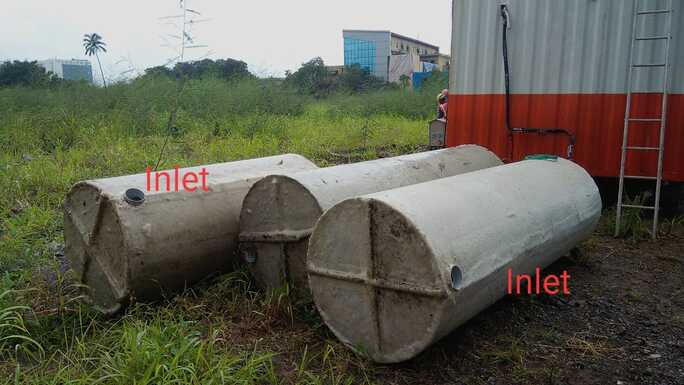
A biodigester tank consists of three chambers. In the first chamber, the microbial consortium feeds on the organic waste.
It initiates the decomposition process as soon as the human excreta or fecal matter from the toilet outlet reaches the chamber.
Also, the solid and liquid waste are separated in the chamber.
Once the first chamber is filled, the water overflows and reaches the second chamber, where further treatment is performed, removing nearly 90% of the waste.
In the final chamber, the effluent is estimated to be 98% clean and free of pathogens and harmless by-products, which can be safely used for irrigation.
Advantages of Biodigester Septic Tank
There are many advantages of using a biodigester septic tank system.
One of the benefits is the efficient use of methane for producing biogas.
The biogas can be stored and used as an energy source for electricity, heating, and even cooking purposes.
Other benefits include:
- It can be installed above or beneath the ground
- The bio-degradation process causes no harm to the environment, does not contaminate water, and causes no pollution
- The treated effluent can be used for irrigation or gardening purposes
- Effluent is odourless, colourless, and contains no toxic substances
- No maintenance is required
- No need for manual solid waste removal
- It saves a lot of water
- It is cost-effective when compared to septic tanks
The Government of India’s Swachh Bharat Abhiyan initiative is aimed at providing safe sanitation facilities to all Indians.
As many challenges still plague human waste management in both rural and urban areas, biodigester septic tanks can be a helpful solution to overcome them.
A biodigester septic tank is a modern innovation that is far more convenient and safe than the traditional septic system, especially for the urban population.
It is also affordable and environmentally friendly for those living in rural areas.
Organica Biotech is one of the leading companies with a wide range of advanced sanitation solutions.
A Bioclean Biodigester Tank is a portable tank composed of FRP, UPVC, PCC, and PPGI.
It is highly efficient in decomposing human waste with the help of an advanced microbial culture, Bioclean BD.
The Bioclean Biodigester can also be attached to existing toilets.
The Bioclean Biodigester septic tank is also a sustainable method for treating and managing human waste.
You can also use it to protect the environment.
Recent Blogs


